

The overall safety profile of WELTRUZA was similar to that of oral olanzapine1,2
Treatment-emergent adverse events (AEs)2
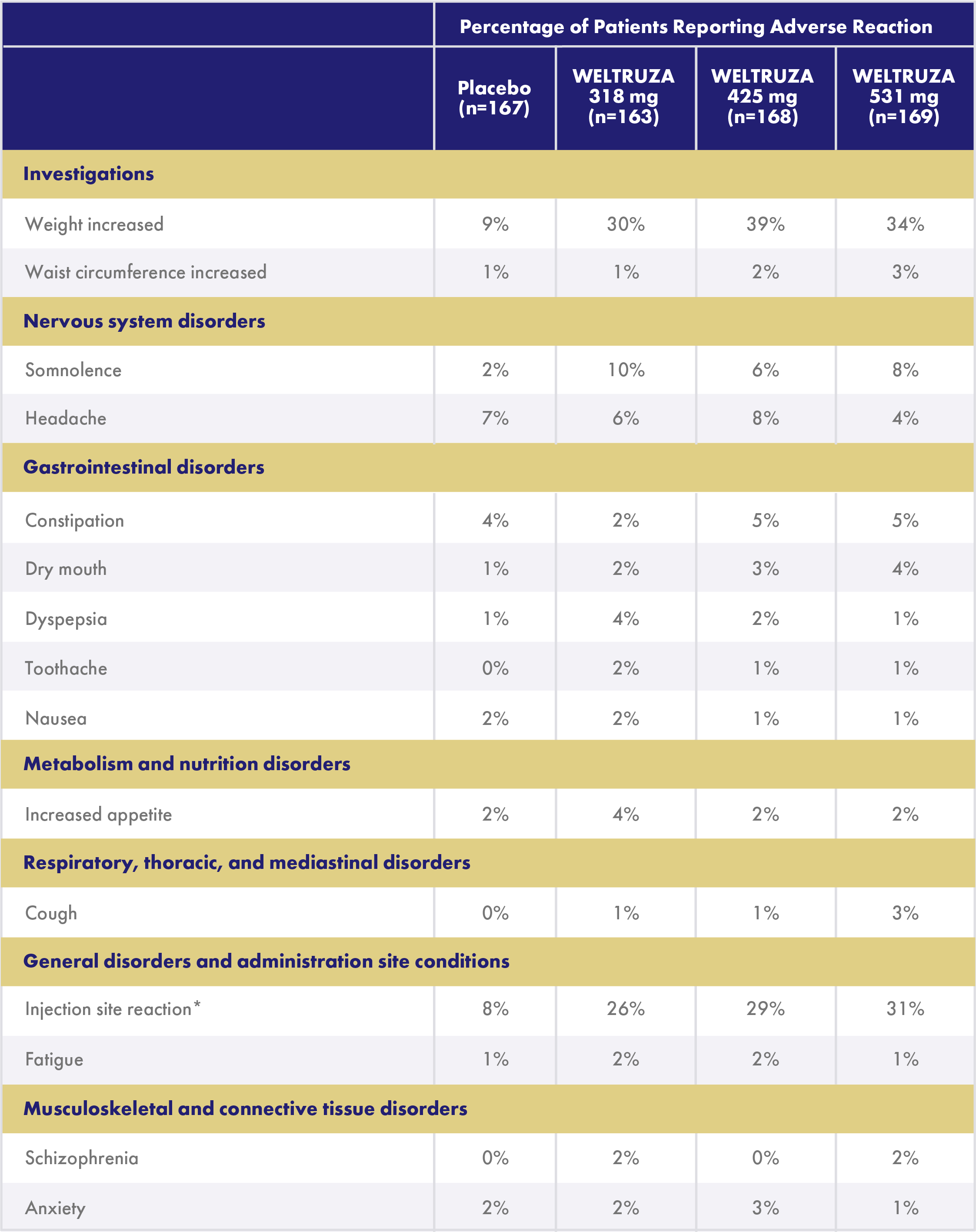
*Injection site reaction is a composite term that includes injection site abscess, bruising, discharge, discomfort, edema, erythema, hematoma, induration, infection, inflammation, injury, irritation, nodule, pain, pruritus, pustule, swelling, and ulcer.
Please see additional Important Safety Information, including Boxed WARNING, below.
Overall tolerability: All 3 doses were similarly tolerated2

Discontinuations due to common adverse events (AEs) were 5% for WELTRUZA and 4% for placebo1
The most common AEs (≥5%): weight increased, somnolence, headache, constipation, and injection site reactions (induration, pain, erythema, pruritus, swelling)2
Serious AEs were reported in 1% of WELTRUZA-treated patients1
Weight gain and metabolic changes were observed and were consistent with the known safety profile of olanzapine, including clinically significant weight gain (≥7% of baseline body weight)2
Most injection site reactions were generally localized and occurred early in treatment. They were self-limiting, declining over the long-term from the first (24%) to the eighth (2%) injection and onwards1,2
up next
Dosing
Explore dosing options with no loading dose or oral supplementation required.
LEARN MOREReferences: 1. Data on file. Clinical Study Report. November 2025. West Chester, PA: Teva Neuroscience, Inc. 2. WELTRUZA™ (olanzapine) extended-release injectable suspension Current Prescribing Information. Parsippany, NJ: Teva Neuroscience, Inc.